-
-
sample data

|
-
-
-
sample data

|
-
sample publication

|
|
Entrez Taxonomy
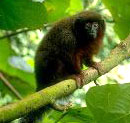
The titis, or titi monkeys, are the New World monkeys of the genus
Callicebus. They are the only extant members of the Callicebinae
subfamily, which also contains the extinct genera Xenothrix,
Antillothrix, Paralouatta, Carlocebus, Homunculus, Lagonimico and
possibly also Tremacebus.
Titis live in South America, from Colombia to Brazil, Peru and north
Paraguay.
The different titi species vary substantially in size and coloring
but resemble each other in most other physical ways. The fur is long
and soft and it is usually reddish, brownish or black and with a
lighter underside. Some species have a bright collar or black
stripes at the head. The tail is always furry and is not prehensile.
Diurnal and arboreal, titis predominantly prefer dense forests near
water. They easily jump from branch to branch, earning them their
German name, "jumping monkey". They sleep at night, but also take a
midday nap.
Titis are territorial. They live in family groups which consist of
parents and their offspring, about three to seven animals. They
defend their territory by shouting and chasing off intruders. Their
grooming and communication is important for the co-operation of the
group. They can typically be seen in pairs sitting or sleeping.
The diet of the titis consists mainly of fruits, although they also
eat leaves, insects, bird eggs and small vertebrates.
Titis are monogamous, mating for life. The female bears a single
young animal after about a five-month gestation. The father cares
for the young, carrying it and bringing it to the mother only for
nursing. The young are weaned after 5 months and are fully grown
after a year. After two to three years they leave their family group
in order to find a mate. Their life expectancy is up to 12 years.
|
|
|
|